
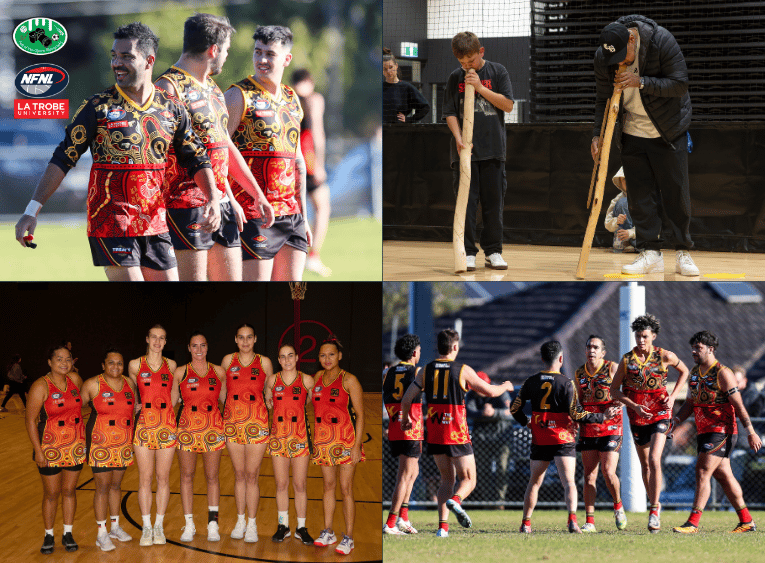
The Northern Football Netball League is excited to celebrate NAIDOC Round, tying in with the national NAIDOC Week from July 5-11.
This year’s NAIDOC Week celebrates not only the accomplishments of the past but also the bright future being shaped by young First Nations leaders, communities and changemakers. It acknowledges the strength of those who have come before us, the vision that continues to drive positive change and the legacy being built for generations to come.
Throughout this weekend’s football and netball matches, clubs will proudly take part in NAIDOC Round, providing an opportunity for everyone involved in our football and netball community to reflect, learn and celebrate the world’s oldest continuing cultures.
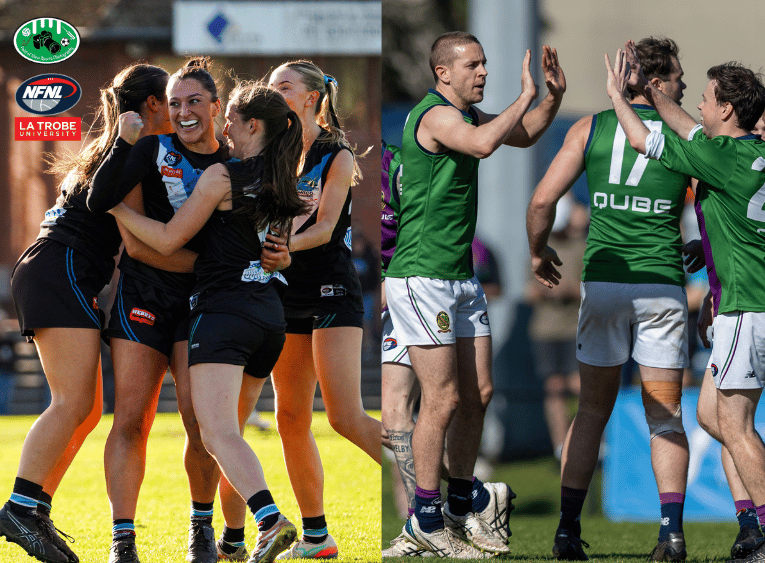
Netball will highlight the game between Fitzroy Stars 1 and Bundoora Bulls being the feature match of the evening at La Trobe Sports Stadium at 6.50pm this Friday 10th July. The game is highlighted by a Cultural performance and Acknowledgement of Country performed by Aunty Esme Bamblett, before the teams take to the court.
The Stars also held held their NAIDOC Cup senior matches last Saturday with both their men’s and women’s senior teams.
Across the league, clubs will recognise NAIDOC Week in a variety of meaningful ways. Many will hold pre-match acknowledgements, wear Indigenous-themed apparel or warm-up tops, invite local Elders and community members to participate in ceremonies, and share educational initiatives that celebrate First Nations history and culture. These activities help create opportunities for connection, respect and understanding both on and off the court and field.
The NFNL is committed to fostering an inclusive environment where everyone feels welcome and respected. NAIDOC Round is an important occasion to acknowledge the significant contributions First Nations peoples have made, and continue to make, to Australian sport and our wider communities.
The league encourages all players, officials, volunteers and supporters to take the opportunity this week to learn more about the history and cultures of First Nations peoples, engage with local community events and reflect on how we can all contribute to a more inclusive future.
The NFNL thanks all clubs for embracing NAIDOC Round and for helping celebrate the rich cultures, stories and contributions of First Nations Australians throughout our community.
This Year’s NAIDOC Theme
This year’s NAIDOC Week’s theme is ’50 Years of Deadly’, the theme stands as a tribute to all people who have built the movement. As NAIDOC Week celebrates five decades, the theme marks this milestone.
NAIDOC Week is held annually each year, in the first week of July. The week has a rich history in celebrating and recognising the cultures, history and achievements of Aboriginal and Torres Strait Islander peoples across the country.
NAIDOC Week offers an opportunity to every Australian to learn about and listen to First Nations cultures and histories, and to participate in celebrations of the oldest, continuous living cultures on earth.
“NAIDOC has always been more than a week — it’s a platform, a protest, a celebration, and a statement of survival” – National NAIDOC Committee, 2026
View this post on Instagram
A Brief History of NAIDOC Week
To help understand the significance of NAIDOC Week, take a look back at the history of NAIDOC Week, which is filled with a history of community, activism and protest.
1920 – 1930
Prior to the 1920s, Aboriginal rights groups boycotted Australia Day (January 26) in protest of the treatment and status of Indigenous Australians. Despite boycotts each year, the wider Australian public was largely ignorant towards them.
Several groups and organisations came to fruition to push this movement to be continually active.
Key to this movement were the Australian Aborigines Progressive Association (AAPA) (formed in 1924) and the Australian Aborigines League (AAL) (formed in 1932). These organisations had their efforts continually overlooked and faced consistent police harassment, the AAPA dismantled in 1927.
The founder of the AAL, William Cooper drafted a petition to King George V, in 1935. The Petition asked for special Aboriginal electorates in Federal Parliament. The petition was ignored as the Australian Government stated they believed the petition was outside their constitutional responsibilities.
1938
On January 26, 1938, protestors marched through Sydney, followed and supported by a congress of over 1,000 people.
This was one of the first major civil rights gatherings across the globe, known as the Day of Mourning.
From 1940 until 1955
The Day of Mourning was held annually, the Sunday before Australia Day. In 1955, it was moved to the first Sunday in July, after it was decided it should not simply be a protest day, but also a day of celebration of Aboriginal Culture.
1956 – 1990
“The National Aboriginies* Day Observance Committee (NADOC)” * was formed and the second Sunday of July became a day of remberance for Aboriginal people and their heritage.
1972 – 1975
NADOC was supported major Aboriginal organisations, state and federal governments.
1972 – the Department of Aboriginal Affairs was formed, as a major outcome of the 1967 referendum.
1974 – First NADOC Committee composed completely of Aboriginal members.
1975 – The event was extended to a week-long celebration, from the first to second Sunday in July
1984 – NADOC called for a national holiday, to help celebrate and recognise the important and rich unique cultural history of Australia. This call has never been met, other groups continue to support the call.
1991 – Present
NADOC expanded to NAIDOC, to recognise Torres Strait Islander People and the distinct cultural histories of both Aboriginal and Torres Strait Islander cultures. The new name became the title for the entire week, not just one day.
Editor’s Note: The NFNL respectfully acknowledges the now defunct and inaccurate term ‘Aborigines’, the use of the term is out of respect to the history of the use by Indigenous Elders.
You can view more resources, history and opportunities to get involved, please click here.